
AI in Neurosurgery, Free Coding Lessons, The Future of Bioprinting
Your Fortnightly Dive into MedTech Innovation, Events, and Insights

Dear Reader,
Welcome to the second edition of the Manchester MedTech Society Newsletter. It’s great to see our community growing, and we’re glad you’re here to explore how technology is changing healthcare.
This issue highlights real progress in MedTech, from AI predicting cardiac arrests before they happen to AI improving precision in brain surgery. These advances remind us that innovation is ultimately about helping people and improving care.
We hope this edition leaves you informed, inspired, and excited about what’s ahead.
🧬 Research Frontiers
In this section, discover the most recent innovations in MedTech, curated specially for you.
AI on Watch: Predicting Crises Before They Strike
“ML algorithms have shown promising results in predicting in-hospital cardiac and respiratory arrest using readily available clinical data.”
- Frontiers in Medical Technology
Researchers reviewed studies that used artificial intelligence (AI) to predict serious hospital emergencies like cardiac arrest and respiratory arrest. These models use routine hospital data such as heart rate, oxygen levels, and lab results to identify patients at risk before an emergency happens. Many of the models performed well, especially for predicting cardiac arrest, showing strong accuracy in identifying high-risk patients.
AI tools show strong potential to spot early warning signs of life-threatening events in hospitals – but to actually save lives, they must be tested in real-world settings and seamlessly fit into how healthcare teams work every day.
Interested? Read more here.
AI Meets Gamma Knife: Sharper Brain Surgery Starts Now
“AI is set to revolutionise GKRS by advancing imaging capabilities, refining treatment planning, enabling real-time monitoring, and enhancing post-treatment evaluations.”
- Thieme Open - Neurosurgery Review
Gamma Knife Radio-surgery is already one of the most precise ways to treat brain tumours and other neurological conditions without open surgery. Now, artificial intelligence is taking it a step further. Researchers are integrating AI into treatment planning and imaging workflows, allowing computers to analyse scans, identify targets, and optimize radiation delivery. The result? Healthy brain tissue is spared, treatment times are shorter, and neurosurgeons can plan complex procedures more efficiently.
These advancements aim to improve the accuracy and efficiency of radiological assessments, potentially transforming how medical imaging is approached and utilised in clinical settings.
Want to read more? Click here.
🎟️ Your Access: Upcoming Events
In this section, see what events we have coming up, and how you can get involved.
Coding Workshop
Take your skills to the next level with our 4-week coding workshop. Perfect for students starting from scratch and anyone curious about medical-specific tools. No experience needed, just curiosity and a willingness to learn.
Taught by a MedTech developer and a PhD student in AI, you’ll gain hands-on experience, practical tips, and real-world coding skills. By the end, you’ll be ready for our first flagship event and confident to apply your knowledge.
📅 Starts: 22nd October
🕖 Time: 6:00PM-7:30PM
📍 Venue: 3.204, University Place
💰 Completely free
Don’t miss this chance to learn, innovate, and get ahead in MedTech.
Coming Soon…
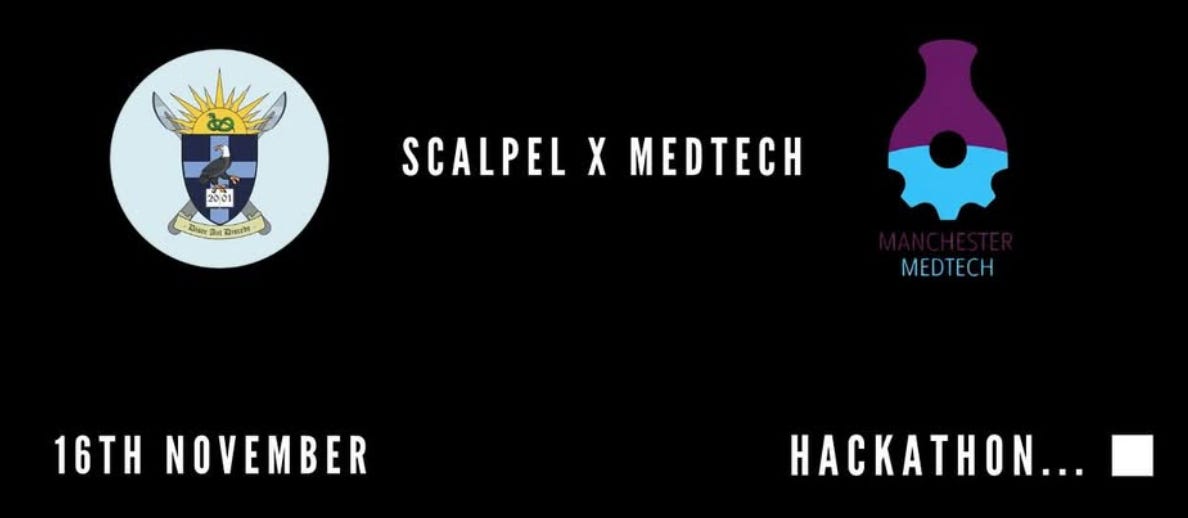
Something big is on the horizon. Our flagship hackathon is coming, a one-of-a-kind event designed to give you the chance to innovate, collaborate, and make an impact like never before. With huge prizes and opportunities to showcase your skills, this is an event you will not want to miss.
Keep an eye on our socials next week for a major announcement with Scalpel and all the details about this unique opportunity.
🧠 On The News…
In this section, we explore some hot topics in the world of medicine, and provide resources for you to have a further read.
The Future of Bioprinting
In this episode of The Future of Everything, Stanford bioengineering professor Russ Altman interviews Mark Skylar-Scott, a leading expert in 3D bioprinting. Skylar-Scott discusses his team’s groundbreaking work in printing human tissues, including the ambitious goal of creating a fully functional human heart. The conversation delves into the complexities of engineering heart cells, building vascular networks, and the ethical considerations surrounding the use of human cells in bioprinting. Skylar-Scott also shares insights into the future of bioprinting and its potential to revolutionise organ transplantation. This episode offers a fascinating glimpse into the cutting-edge field of bioprinting and its implications for the future of medicine.
Robots in the OR
Watch this video to learn more about robotic surgery; a key development in the MedTech space over the past few years.
MedTech Trends to Watch in 2025
Clarivate highlights five key trends shaping MedTech next year:
AI & Machine Learning – transforming diagnostics and treatment.
Global Expansion – tapping emerging markets with local partnerships.
Health Equity & Sustainability – focusing on fair access and eco-friendly practices.
Ambulatory Surgery Centers – shifting procedures to outpatient settings.
AI Integration – advancing diagnostics while navigating regulatory challenges.
Innovation, regulation, and societal impact are driving the future of MedTech.
Want to read more? Click the link below.
📣 Society Updates
Thank you once again for making it to the end of this newsletter. A huge thank you to everyone’s support on the last one, we saw growth and interaction that we couldn’t have even imagined one year ago. Another huge thank you to everyone who came to our two events in the past fortnight. They both went incredibly well and I hope that you can continue to support us whenever you can on campus. Once again, if you’ve enjoyed this and want to support us, please consider buying a membership for exclusive benefits and direct connection with the world of MedTech. We are also working on new benefits we can bring, so join now to get ahead of the curve. Thank you for reading, and we hope to see you back in two weeks!
Sincerely,
Manchester MedTech